Spotting contractor scams and red flags
Contractor scams can cost you money, time, and a lot of stress. The safest path is to get matched with licensed, bonded, and insured general contractors, compare bids carefully, and verify credentials yourself before you sign anything or pay a deposit.
The short answer
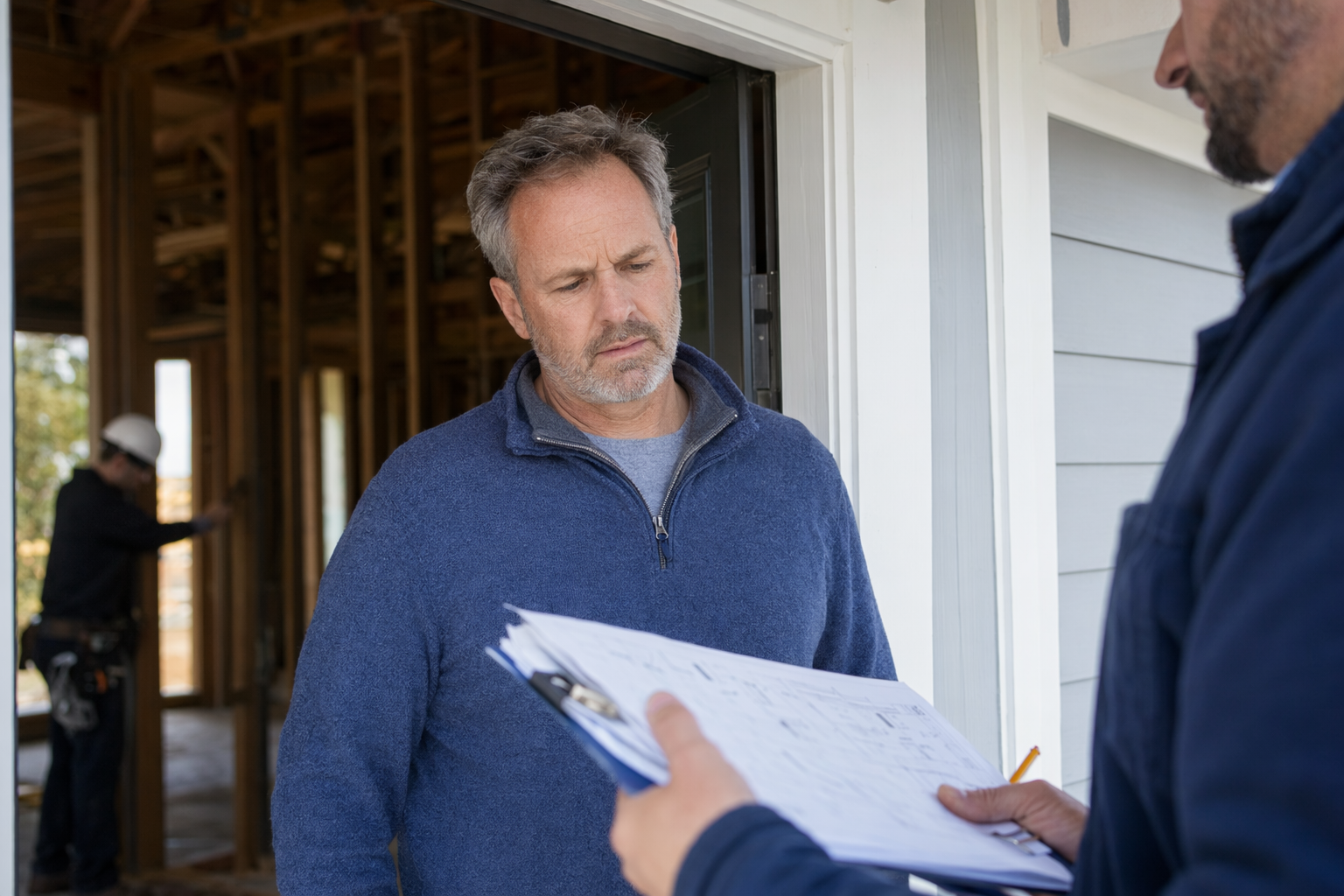
Most contractor scams follow a few common patterns. Someone asks for a large payment up front, refuses to give a clear written contract, pressures you to decide today, says permits are not needed, or cannot clearly prove they are licensed, bonded, and insured. Another common red flag is a bid that is far lower than everyone else's. Sometimes that means the contractor plans to cut corners, use cheap materials, pile on surprise charges later, or disappear after taking a deposit.
A safer process is simple. Get matched with more than one licensed general contractor, compare written bids line by line, check the license status with your state or local agency, confirm insurance and bond information, ask who will actually be on site, and never sign a vague contract. Mainstay Builders is a free matching service. We connect homeowners with contractors, but you should always verify credentials and choose your own licensed pro.
Why it matters for your project
Scams do not only happen on huge jobs. They happen on additions, structural repairs, kitchen remodels, roofing, foundation work, and even smaller projects that seem simple at first. If the wrong person starts work, the damage can spread. You may end up paying twice: once to the bad contractor, and again to a licensed professional to fix unsafe or incomplete work.
The risk gets even bigger when the work affects structure, plumbing, electrical systems, roofing, or permits. If work is done without the right permits or inspections, you can face fines, failed inspections, delays, insurance problems, or trouble when you sell the home later. In some cases, unfinished or unsafe work can make part of the home unusable for weeks or months.
Scammers also know that many homeowners feel pressure. Maybe you have a leak, storm damage, a growing family, or a parent moving in. Maybe English is not your first language and paperwork feels hard to compare. That does not mean you are an easy target. It means you deserve a slower, clearer process with written details, translated help if needed, and time to verify everything before you commit.
- Bad work can create safety risks, not just cosmetic problems.
- Missing permits can delay the job and create legal or resale issues.
- A low bid can become a very expensive project if change orders pile up.
- Large deposits increase the risk of losing money if the contractor disappears.
- Pressure tactics are often used to stop you from comparing options.
Step by step: how to spot scams before you sign
Start by talking to more than one contractor. A single bid gives you no baseline. Two or three written bids help you spot prices that are strangely low, missing line items, or padded with vague allowances. Ask each contractor to describe the same project scope so the comparison is fair.
Next, verify the basics yourself. Ask for the full business name, license number, proof of general liability insurance, and workers' compensation coverage if they have employees or crews. Check the license with your state or local licensing board. Confirm that the business name on the bid matches the license and insurance paperwork. If the names do not match, ask why before moving forward.
Then review the contract slowly. A good contract should spell out the work, major materials, who pulls permits, estimated payment schedule, estimated start and completion windows, and how changes will be handled. It should not be one short page with vague phrases like 'remodel bathroom' or 'repair foundation as needed.' If the words are too broad, the door is open for conflict later.
Pay close attention to money. Be careful with any contractor asking for a very large deposit, cash only, or full payment before materials arrive and work is completed. Payment schedules should usually connect to real progress on the job, not promises. Keep records of every payment, every signed change order, and every message about scope, delays, or materials.
Also ask practical questions. Who will supervise the work each day? Will subcontractors be used? How will the site be protected? What inspections are expected? What is excluded from the price? Honest contractors usually answer clearly. Scammers often stay vague, dodge details, or change the story.
- Get at least 2-3 written bids for the same scope.
- Verify the contractor is licensed, bonded, and insured before signing.
- Check that the business name is consistent on the license, insurance, and contract.
- Read the scope of work line by line. Ask questions about anything unclear.
- Make sure the contract says who is responsible for permits and inspections.
- Avoid cash-only deals and keep written records of every payment.
- Do not let anyone start major work without a signed contract.
- Do not rely on text messages alone for important scope or price changes.
Common red flags and common mistakes
One major red flag is urgency. 'I have extra materials from a job nearby.' 'This price is only good today.' 'You need to sign right now before the city gets involved.' These lines are meant to rush you past normal checks. Another red flag is a contractor who says permits are optional when the job clearly involves structural, electrical, plumbing, roofing, or major layout changes. Sometimes permits really are not needed for minor work, but you should verify that with your city or county, not just take someone's word for it.
Be cautious if the contractor has no physical business address, will not put promises in writing, wants payments sent to a personal account, or asks you to make checks out to an individual instead of the licensed business. Watch for contracts that are missing dates, missing cleanup terms, missing product details, or missing a process for change orders. Those gaps often become expensive later.
Homeowners also make understandable mistakes. Many people focus only on the bottom-line price. But the cheaper bid may leave out demolition, hauling, permit fees, engineering, finish materials, or repair of hidden damage. Another common mistake is assuming a friendly person is a reliable business. Personality matters, but paperwork matters more.
If English is not your first language, ask for key terms to be explained in plain language before you sign. Bring a trusted family member or interpreter if that helps. Take photos of the contract and store copies of all documents. You should never feel embarrassed for asking someone to slow down and explain.
- Pressure to sign immediately.
- No license number on the estimate or contract.
- Refusal to provide insurance information.
- Very large up-front payment requests.
- Cash only, wire transfer only, or payment to a person instead of the business.
- No clear plan for permits or inspections.
- A bid that is much lower than the others without a clear reason.
- Vague scope such as 'repair as needed' or 'complete remodel' with no detail.
- Poor communication before the job even starts.
- No written change-order process.
Honest cost and time notes
There is no universal scam-proof price, and no one should promise that the lowest bid is safe or that the highest bid is best. Costs vary by region, project size, permit requirements, design complexity, and labor demand. The numbers below are broad national estimates, not quotes or guarantees. They are here to help you spot bids that seem unrealistically low or oddly vague.
Be especially careful if a contractor gives a price that seems too good for the amount of work involved. For example, a major addition, structural change, or full gut renovation usually includes design coordination, permits, labor, materials, inspections, and contingency for hidden conditions. A tiny number may mean key pieces were left out. That does not always mean fraud, but it does mean you should ask for a detailed breakdown.
Time promises can also be a warning sign. Major projects often take longer than homeowners hope because of permitting, inspections, weather, material lead times, subcontractor scheduling, and surprises inside walls or under floors. A contractor who promises a huge project will be finished unusually fast without seeing the full conditions may be telling you what you want to hear. Look for realistic estimated windows, not guarantees.
What good contractor communication looks like
A trustworthy contractor does not need perfect words or fancy brochures. What matters is clear, steady communication. They explain the scope in plain language. They answer questions without acting annoyed. They tell you what is included, what is excluded, and what might change if hidden problems show up. They also make it clear that permit approvals, inspections, weather, and material delays can affect timing.
Good communication also means consistency. The person who gives the estimate should not tell a completely different story from the contract. If one version says permits are included and another says they are not, stop and ask for a corrected written document. If the scope changes, there should be a written change order with price and schedule impact before the extra work begins.
For many families, language access matters just as much as price. It is okay to ask for a slower explanation, a translated summary, or time to review the documents with family. You do not need to share immigration status or sensitive personal information to get matched with contractors. Focus on the project, the property, the paperwork, and the credentials.
Next step
If you are planning a new build, addition, structural repair, or major renovation, the next step is not to rush. It is to compare. Mainstay Builders is a free matching service that connects homeowners with licensed, bonded, and insured general contractors for major residential projects. We do not perform the work, and we are not a licensed building professional, so you should always verify each contractor's credentials and decide who to hire yourself.
When you get matched, ask each contractor for a written bid, proof of license, bond, and insurance, and a clear explanation of permits, payment schedule, and project scope. Compare the documents side by side. If something feels off, pause. A good contractor will still be there after you have had time to read and verify.
Frequently asked questions
What is the biggest warning sign of a contractor scam?
One of the biggest warning signs is pressure tied to money, especially a demand for a large up-front payment before clear paperwork is provided. Other major red flags are no valid license, no proof of insurance, and no detailed written contract. One red flag alone may not prove a scam, but several together are a strong reason to walk away.
Is the cheapest bid always a scam?
No. Sometimes a lower bid is real because a contractor has lower overhead or a different schedule. But if one price is far below the others, ask what is missing, what allowances were used, and whether permits, cleanup, or finish materials are included. Treat all prices as estimates until you have a full written scope and verify credentials.
How do I verify that a contractor is licensed, bonded, and insured?
Ask for the business name, license number, and current proof of insurance and bond information. Then check the license with your state or local licensing agency and review the insurance documents to make sure the business name matches the contract. If anything does not match, ask questions before signing or paying.
Should I ever pay a deposit?
Many legitimate contractors do require a deposit, especially for larger jobs and material scheduling. But the amount and rules vary by state and project type, so make sure the payment terms are written clearly and connected to real milestones. Be cautious with very large deposits, cash-only demands, or requests for full payment before major work begins.
What if the contractor says permits are not needed?
Do not assume that is correct. Permit rules depend on your city, county, and the type of work being done. For structural, electrical, plumbing, roofing, and major renovation work, it is smart to verify permit requirements with the local building department yourself.
Can Mainstay Builders tell me which bid is best or whether a contract is legally safe?
No. Mainstay Builders is a free matching service, not a contractor, lawyer, engineer, or building official. We connect you with licensed general contractors, but you should review bids carefully, verify credentials, and get professional legal or technical advice if you need it.
I am worried because English is not my first language. What should I do?
Take your time and ask for plain-language explanations of the scope, payment schedule, and permit plan. Bring a trusted family member or interpreter if needed, and keep copies of every document and message. You do not need to share immigration status, SSN, or other sensitive personal information just to get matched with contractors.
What should be in a good contractor contract?
A solid contract usually includes the full business name, license information, project address, scope of work, major materials, payment schedule, permit responsibility, estimated timing, and change-order process. It should also be clear about what is excluded. If the contract is vague, incomplete, or different from what was promised during the estimate, ask for corrections before signing.