What is a load bearing wall
A load bearing wall is a wall that helps hold up the weight of your house. If you are planning to remove, move, or change one, you need a licensed, bonded, and insured contractor and often an engineer or local permit review before any work starts.
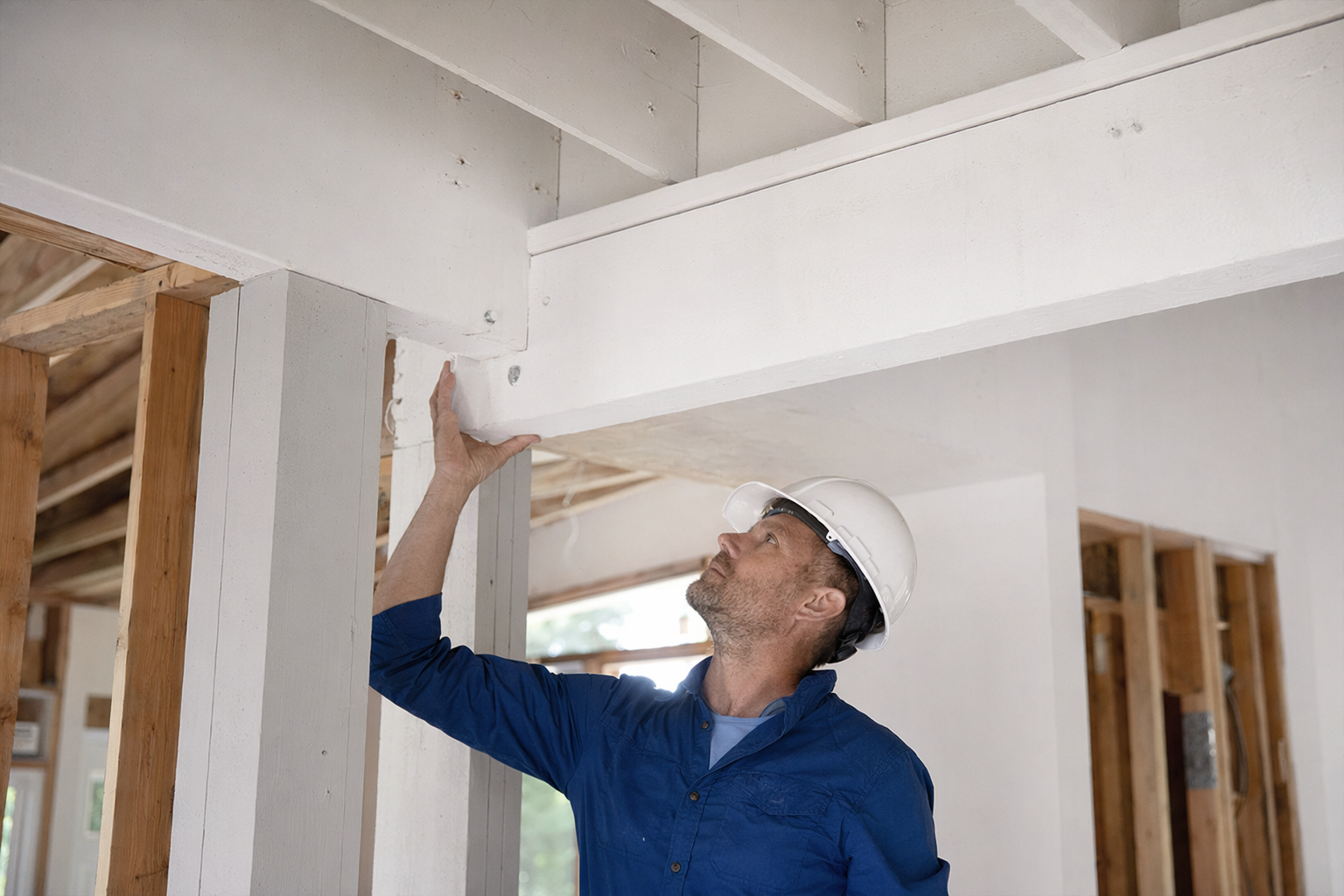
Short answer
A load bearing wall carries weight from parts of the home above it and transfers that weight down to the foundation or another supported part of the structure. That weight may come from the roof, upper floors, ceiling framing, or beams. Not every wall does this. Some walls are only there to divide rooms and do not support the structure.
For a homeowner, the big point is simple: you should never assume a wall is safe to remove just because it looks small or does not seem important. A wall can look like a basic interior partition and still be carrying structural load. On the other hand, some thick walls are not load bearing at all. The only safe path is to have a qualified licensed professional inspect the home and confirm what the wall is doing before demolition begins.
What it means for you
If a wall is load bearing, changing it is not the same as a simple cosmetic update. It usually becomes a structural project. That means the work may need planning, drawings, permits, inspections, temporary support during construction, and a permanent replacement such as a beam and posts.
This matters whether you are opening up a kitchen, combining two rooms, adding a larger doorway, creating an open floor plan, or finishing a remodel after buying an older home. Removing the wrong wall the wrong way can lead to sagging floors, ceiling cracks, doors that stop closing properly, damage to finishes, or in severe cases major structural failure. Even if nothing dramatic happens right away, hidden problems can show up over time.
It also affects your budget. A non-structural wall removal may be fairly straightforward. A load bearing wall project can cost much more because it may involve engineering, permits, temporary shoring, a new beam, posts, drywall repair, flooring patching, electrical rerouting, plumbing changes, and painting. Costs vary a lot by region, home type, wall length, and what is hidden inside the wall.
These are broad national estimates, not quotes or guarantees. Some projects cost less. Many cost more, especially in high-cost areas, older homes, multi-story homes, or homes with complex framing, utilities, or finish work.
How it works in practice
In simple terms, houses move weight downward. The roof and upper floors put weight onto framing members. That weight is carried by joists, beams, walls, posts, and other structural parts until it reaches the foundation and the ground below. A load bearing wall is one part of that path.
When a contractor or engineer evaluates a wall, they look at the whole structure, not just the wall by itself. They may check the direction of floor or ceiling joists, look in the attic, inspect the basement or crawl space, review plans if available, and look for beams, posts, and foundation support below. A wall that runs perpendicular to joists is often more likely to be load bearing, but that is not a rule you can rely on by itself. Framing can be modified over time, and homes can have additions, previous remodels, or unusual layouts.
If the wall is carrying weight and you want it opened up, the usual solution is not to simply take it out and hope for the best. The structural load has to be redirected. In many homes, that means temporary supports are installed first, then part or all of the wall is removed, then a properly sized beam is installed, often with posts at one or both ends to carry the load to a suitable support below. In some cases, support must continue all the way down through lower floors to the foundation.
- A contractor may start by opening small inspection areas to see what is inside the wall.
- A structural engineer may be needed to calculate the right beam size and support points.
- The city or county may require plans, a permit, and inspections.
- Temporary shoring is often used so the structure stays supported during the work.
- Electrical, plumbing, or HVAC lines inside the wall may need to be rerouted.
- After the structural work, finishes usually need repair: drywall, trim, paint, and sometimes flooring or ceiling texture.
This is one reason experienced, licensed general contractors matter on structural remodels. They coordinate the sequence of work, line up the right trades, and help keep the project moving in a safer and more organized way. Even then, you should ask questions, review the scope carefully, and verify licenses, bond status where applicable, and insurance before you sign.
Common signs a wall might be load bearing

There is no single visual clue that confirms a wall is load bearing. Still, some patterns can raise the chance that it is. These are only clues, not proof.
- The wall is near the center of the house and lines up with support below.
- The wall sits under another wall on the floor above.
- Ceiling or floor joists appear to end at the wall or cross over it in a way that suggests support.
- The wall is directly below a ridge beam, major beam, or roof support area.
- The wall was part of the original structure while nearby walls were added later.
- The home has a long span that seems unlikely to be unsupported without help.
There are also many cases where people guess wrong. A wall may look central but not actually carry load. Or a short wall segment, column, or closet wall may be doing more structural work than expected. That is why online diagrams and neighbor advice are not enough for a real project.
What to watch for before any demolition
The biggest mistake is treating a possible load bearing wall like a weekend demo project. Before any wall comes down, you need to know two things: whether the wall is structural, and what else is inside it. A wall can contain wiring, plumbing, gas lines, ductwork, vents, or communication cables. Any of those can add cost, change the plan, or create safety risks if handled badly.
Older homes can bring extra issues. Hidden damage, undersized framing from past work, uneven floors, patched openings, or outdated systems may only become clear once walls are opened. In some homes, materials such as lead paint or other hazardous materials may also be a concern. Rules vary by location, and proper handling matters.
- Do not assume a wall is non-structural because it is interior.
- Do not rely on a quick visual guess from photos alone.
- Do not start demolition before checking local permit rules.
- Do not hire anyone who cannot clearly show license and insurance information.
- Do not skip written scope details on beam work, posts, finishes, and cleanup.
- Do not ignore signs of structural distress such as sagging, wide cracks, or sticking doors.
A careful contractor will explain what they know, what still needs to be confirmed, and where engineering or permit review may be required. Honest answers matter here. If someone promises a fast wall removal without checking support conditions, that is a red flag.
Questions to ask a contractor
When you talk with contractors about a wall you want to remove or open up, ask direct questions. You are not expected to know the technical details, but you should know how they plan to confirm the wall type, who handles permits, and what happens if the wall contains utilities or needs added support below.
- Do you think this wall may be load bearing, and how will you confirm that?
- Will this job need a structural engineer or stamped plans?
- Will you pull permits if they are required?
- Are you licensed, bonded, and insured for this type of work?
- What is included in the estimate: demo, beam, posts, drywall, paint, flooring, electrical, plumbing, inspections, and cleanup?
- How will you protect the home and support the structure during the work?
- What could change the price after the wall is opened?
- Can you provide proof of license and insurance for me to verify?
It is also smart to compare more than one estimate. Look for clear scope, not just a low number. A cheaper estimate may leave out engineering, finish repairs, permit costs, or utility work. Apples-to-apples comparisons help you avoid expensive surprises later.
Get matched for your project
If you think a wall in your home might be load bearing, the next step is not to guess. It is to have the home reviewed by the right licensed professionals. Mainstay Builders is a free matching service that connects homeowners with licensed, bonded, and insured general contractors for major renovations, structural work, additions, and new builds.
We help you get connected with contractors who fit the type of project you are planning. Many families want clear communication, simple explanations, and help finding professionals who understand their household needs. We welcome that. You do not need to share sensitive personal information with us to get started, and we do not ask for immigration status, SSN, or similar private data.
Once matched, you can talk with contractors, compare written estimates, ask about permits and structural review, and choose the licensed pro you trust. Mainstay Builders does not perform construction work or provide engineering, legal, or code advice. The final choice is always yours, and you should always verify credentials before signing a contract.
Frequently asked questions
Can I tell if a wall is load bearing by looking at it?
Usually, no. Some clues can suggest it, but a visual guess is not enough for a safe decision. A licensed contractor and, in some cases, a structural engineer should inspect the home and confirm how the load is carried before any demolition starts.
Is every wall on the first floor load bearing?
No. Many first-floor walls are just partition walls that divide space. But some first-floor walls do support upper floors or roof loads, so each wall needs to be evaluated in the context of the whole house.
What happens if I want an open floor plan but the wall is load bearing?
In many cases, the opening is still possible, but the load has to be supported another way. That often means a beam and posts, plus permits and sometimes engineering. The best approach depends on your home's framing, local rules, and the size of the opening.
Do I need a permit to remove a load bearing wall?
Often yes, but permit rules vary by city and county. Structural changes commonly require permit review and inspections, and some jobs may also require engineering drawings. Your licensed contractor should explain local requirements, but you should verify them before work begins.
How much does it cost to remove a load bearing wall?
Nationally, homeowners often see broad ranges from about $4,000 to $15,000 or more, but some projects fall outside that range. Costs depend on beam size, span, engineering, permits, utility relocation, finish repairs, and local labor rates. These are estimates, not quotes or guarantees.
Can I remove part of a load bearing wall for a wider doorway or pass-through?
Sometimes, yes. But even a partial opening can still require a header or beam sized for the load above. A licensed, bonded, and insured contractor should review the plan, and structural engineering may be needed.
What professionals are usually involved in this kind of project?
Often a licensed general contractor leads the job, and a structural engineer may be involved if calculations or plans are needed. Depending on what is inside the wall, electricians, plumbers, or HVAC trades may also need to do part of the work. Requirements vary by project and location.
How can Mainstay Builders help?
Mainstay Builders is a free matching service, not a contractor. We connect homeowners with licensed, bonded, and insured general contractors for structural remodels, additions, major renovations, and new builds. You compare your options, verify credentials, and choose the pro that fits your project.