Garage & ADU builders
Planning a detached garage, ADU, or backyard unit is a big step. Mainstay Builders is a free matching service that connects homeowners with licensed, bonded, and insured general contractors who handle garage and ADU projects, so you can compare qualified local options and choose the pro that fits your goals.
What this project involves
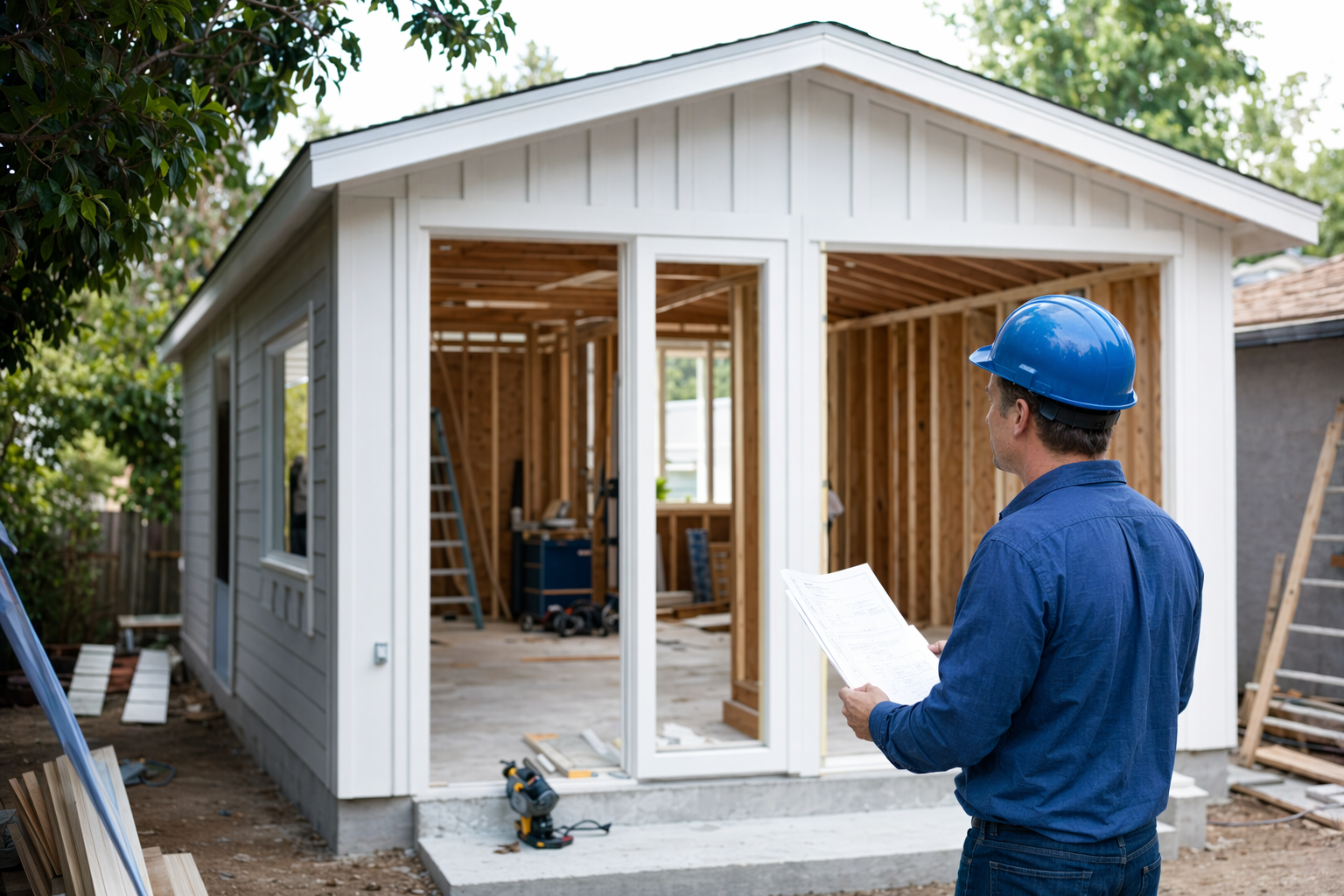
Garage and ADU projects can look simple from the street, but they usually involve much more than pouring a slab and putting up walls. A detached garage may include grading, foundation work, framing, roofing, electrical, doors, windows, insulation, and driveway changes. An accessory dwelling unit, or ADU, often adds even more steps, such as plumbing, sewer or septic connections, a kitchen, bathroom, heating and cooling, fire safety features, and utility upgrades.
Every city and county has its own rules. Setbacks, lot coverage limits, height limits, parking rules, utility access, and owner-occupancy rules can all affect what you can build. In some areas, a garage conversion may qualify as an ADU. In others, a detached backyard unit has a different approval path. That is why it helps to talk with a licensed general contractor who has real experience with local permitting and inspections.
Mainstay Builders does not design or build the project. We connect you with licensed, bonded, and insured contractors so you can ask questions, compare experience, and decide who you want to hire. You should always verify the contractor's current license, insurance, and references before signing any contract.
- Detached garages for parking, storage, workshops, or mixed use
- Garage conversions into legal living space where local rules allow
- Detached ADUs, backyard cottages, in-law units, and guest houses
- Structural work tied to foundations, framing, and roof systems
- Major renovations that prepare an existing structure for ADU use
- Site work tied to drainage, access, and utility connections
How the process works
Our role is simple. We learn the basics of your project and match you with contractors who may be a fit for the type of work you need. That can save time, especially if you are trying to find a builder who understands ADU rules, detached structures, structural changes, and larger residential construction.
After you get matched, the contractor usually reviews your property details, project goals, budget range, and timeline. Some contractors may want to see a survey, rough sketches, photos, or existing plans. Others may suggest a site visit before they can tell you whether the project seems realistic. This is normal. Garage and ADU work depends heavily on the lot, the structure, the utility setup, and local code.
- Tell us the type of project you are planning
- We connect you with licensed, bonded, and insured general contractors
- You discuss scope, local code issues, and next steps directly with them
- You compare communication style, experience, credentials, and pricing approach
- You choose whether to move forward with any contractor
Permits, licensing, and inspections
Most detached garages and nearly all ADUs require permits. The exact permits depend on the scope, but they often include building permits and may also include electrical, plumbing, mechanical, grading, drainage, or utility permits. If the project changes a foundation, modifies structural framing, adds living space, or creates a separate dwelling, you should expect a more detailed review process than a simple repair.
ADU projects in particular can trigger questions about setbacks, lot size, utility service, sewer capacity, fire separation, energy standards, egress, and occupancy rules. Some jurisdictions have become more ADU-friendly, but that does not mean approval is automatic. A licensed contractor with local experience can help you understand the usual process, but you should also verify city or county requirements for your property.
Mainstay Builders is not a licensed building professional, lawyer, architect, or engineer. We cannot tell you what is allowed on your lot or guarantee permit approval. We can connect you with licensed contractors, and you should verify their credentials yourself before signing. If your project needs stamped plans or engineering, the contractor may recommend that you also work with a qualified design or engineering professional.
- Check that the contractor's license is current in your state
- Confirm they are bonded and insured before work begins
- Ask who is responsible for permits and inspections in the contract
- Make sure the scope matches what will actually be built
- Do not rely on verbal promises about approvals or timelines
- Keep copies of permits, plans, insurance certificates, and change orders
What it typically costs
Costs for garages and ADUs vary a lot by region, lot conditions, utilities, finish level, and local code requirements. Labor rates are higher in some markets. Tight sites, sloped yards, poor soil, utility trenching, sewer upgrades, and custom finishes can also raise the total. These numbers are broad national estimates, not quotes or guarantees.
Those ranges can move up fast if the project needs retaining walls, major grading, new utility lines, electrical panel upgrades, upgraded sewer service, extensive foundation work, or premium interior finishes. In high-cost areas, a detached ADU can exceed these ranges. On the other hand, a very simple detached garage on an easy site may cost less.
When you compare contractors, focus on what is included. One proposal may include permit handling, utility trenching, appliances, and finish materials, while another may not. A lower price is not automatically the better deal if key items are missing. Ask for a written scope and make sure allowances, exclusions, and change-order terms are clear.
How to choose the right contractor
Garage and ADU work sits in the middle of several trades and local rules. You want a licensed general contractor who has actually handled detached structures, additions, structural framing, and permit-driven residential work. A contractor who mostly does small repairs may not be the best fit for a standalone backyard unit or a code-heavy garage conversion.
Ask practical questions. How many similar projects have they completed recently? Do they usually work with detached garages, ADUs, or garage conversions in your area? Who handles permits? Who supervises the work each day? How do they deal with inspection corrections, change orders, and utility issues that show up after the job starts? Clear answers matter.
- Verify license status yourself through the proper state or local agency
- Confirm bond and insurance coverage is current
- Ask for recent examples of similar garage or ADU jobs
- Request a written scope with payment schedule and exclusions
- Check who pulls permits and who schedules inspections
- Make sure the contractor explains communication and project updates clearly
- Do not sign until you understand how changes and delays are handled
It is also smart to notice how the contractor communicates. Good builders do not need to pressure you. They should explain the process in plain language, tell you what they know, and be honest about what they still need to verify. If someone promises a fast permit, a perfect timeline, or a price that seems much lower than everyone else, slow down and ask more questions.
What to have ready before you get matched
You do not need formal plans to start the conversation, but a little preparation helps contractors give better guidance. Think about how you want to use the space. A parking garage, workshop, rental ADU, family unit, guest space, or home office all lead to different design and code questions. The clearer your goals, the easier it is to compare builders.
Try to gather whatever basic information you already have about the property. Even rough measurements, photos of the yard or existing garage, and notes about access can be useful. If you already have surveys, sketches, or prior permit records, keep them handy. If you do not, that is okay. Many homeowners begin with only a basic idea and a realistic budget range.
- Property address and a short description of the lot
- The type of project you want: detached garage, conversion, or new ADU
- Your rough size goal, if you have one
- Photos of the existing garage, yard, driveway, or access path
- Any sketches, plans, survey, HOA rules, or prior permit documents
- Your target budget range and ideal timing
- Questions you want every contractor to answer
You do not need to share sensitive personal information to get matched. We do not ask for immigration status, SSN, or similar data. If language support or clear communication is important for your household, you can say that, and we will do our best to help connect you with contractors who communicate well.
Get matched for your garage or ADU project
If you are planning a detached garage, garage conversion, or ADU, the right start is finding a contractor who understands larger residential construction and local permit realities. Mainstay Builders helps homeowners compare licensed, bonded, and insured general contractors for these more complex projects.
Our service is free to homeowners. You can explain your goals, review your options, and decide whether any matched contractor feels right for your project. Before signing anything, always verify the contractor's license, bond, and insurance, review the written scope carefully, and make sure you understand permit responsibilities, payment terms, and exclusions.
Frequently asked questions
Do I need a licensed contractor for garage & adu builders?
For most detached garage and ADU projects, hiring a licensed contractor is the safest path and is often required for permit-based work. These projects can involve structural framing, foundations, utilities, inspections, and local code issues. Mainstay Builders can connect you with licensed, bonded, and insured general contractors, but you should always verify credentials yourself before signing.
How long does this kind of project take?
It depends on the scope, the permit process, weather, site conditions, and contractor availability. A simple detached garage may move faster than a new ADU with plumbing, kitchen, and utility upgrades, but no one should promise an exact timeline before reviewing the property and local requirements. Treat early timing discussions as estimates, not guarantees.
What should I have ready before I get matched?
Start with the basics: your address, the type of project you want, your rough budget range, and any photos or sketches you have. If you already have a survey, plans, HOA rules, or past permit records, those can help too. You do not need formal plans, and you do not need to provide immigration status, SSN, or other sensitive personal information.